AI is shifting HR from 70% transactional work to 70% strategic, freeing teams to focus on employee benefits design, culture, and retention.
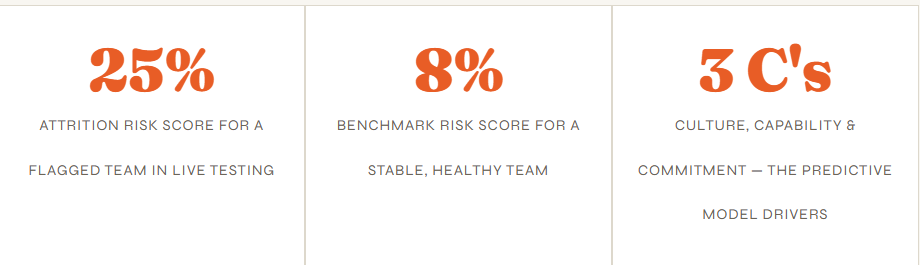
Predictive analytics can now flag teams at risk of attrition before anyone hands in a resignation letter, using a three-factor model: culture, capability, and commitment.
AI-powered chatbots handle self-service employee benefits queries instantly, cutting follow-up, escalations, and HR workload in one move.
Personalized wellness AI is reaching vulnerable employee cohorts proactively, including night-shift workers, new parents, and solo relocators, without requiring them to ask for help.
Data privacy in employee benefits management is non-negotiable: team-level insights, not individual surveillance, is the ethical and effective standard.
India has among the highest burnout rates globally, with roughly 80% of Gen Z workers showing symptoms, making AI-assisted wellness a strategic priority, not a perk.
AI is shifting HR from 70% transactional work to 70% strategic, freeing teams to focus on employee benefits design, culture, and retention.
Predictive analytics can now flag teams at risk of attrition before anyone hands in a resignation letter, using a three-factor model: culture, capability, and commitment.
AI-powered chatbots handle self-service employee benefits queries instantly, cutting follow-up, escalations, and HR workload in one move.
Personalized wellness AI is reaching vulnerable employee cohorts proactively, including night-shift workers, new parents, and solo relocators, without requiring them to ask for help.
Data privacy in employee benefits management is non-negotiable: team-level insights, not individual surveillance, is the ethical and effective standard.
India has among the highest burnout rates globally, with roughly 80% of Gen Z workers showing symptoms, making AI-assisted wellness a strategic priority, not a perk.
The shift in employee benefits experience
The question is no longer whether AI will touch employee benefits management. It already has. The real question is whether HR leaders at small and mid-size companies are using it strategically or just bolting a chatbot onto a legacy system and calling it innovation. At Employee HealthCon 2.0 in Bangalore, five practitioners spanning healthcare delivery, mental health, HRMS platforms, people analytics, and corporate people ops sat down to answer that honestly. What follows is every insight worth keeping.
If you want to watch the entire conversation, click on this YouTube Link.
AI as a force multiplier for HR teams, not a replacement
Leslie, the HR practitioner voice on the panel, named the dynamic that frames everything else: AI is a force multiplier, not a headcount cutter. His team at Tiger Analytics struggles with the same problem every people team faces. How can you be present for employees at the exact right moment, with the exact right information, without burning out a small HR function in the process?
"AI allows us to be there almost always. But if you completely flip to one side versus the other, you break the balance."
-Leslie, People Operations, Tiger Analytics
The panel's consistent answer: AI handles the information layer; humans handle the relationship layer. That division is not a limitation. It is what makes the whole system work.
Will AI replace HR in employee benefits management?
Jitendra from Pocket HRMS opened with a joke, AI went from being everyone's "mother" (the Hindi meaning of "AI") to everyone's "mother-in-law," a source of anxiety rather than comfort. The IBM stock story got a laugh. But his actual argument was sharp. The structural shift Jitendra is predicting:
Today, roughly 70% of HR work is transactional, payroll queries, leave management, compliance documentation.
AI will flip that ratio: 70% strategic, 30% transactional.
Small and mid-size company HR teams gain the leverage of a department twice their size.
"AI is going to change the role of HR rather than eliminate it."
-Jitendra, Co-founder, Pocket HRMS
The moderator pressed: is this the part where HR gets elevated to the boardroom? The panel's answer was yes, but only if HR leaders show up with data. AI in employee benefits management generates the kind of predictive, outcome-linked insight that gets a CFO's attention. Retention risk scores. Insurance cost modeling. Benefits utilization tied to productivity metrics. That's boardroom language.
Why AI is a game-changer for employee benefits across the entire lifecycle
The moderator asked each panelist where they had actually seen AI make a difference across the employee lifecycle: hiring, onboarding, learning, rewards, wellbeing, performance, and exit. Not legacy chatbots. Real AI, right now.
Onboarding: from paperwork to culture transfer
The real cost of poor onboarding is not paperwork. It is the time-to-productivity gap. Employees will never open the policy handbook, but they will ask a chatbot at 11pm. An instant, accurate answer eliminates escalations and gives the HR team hours back.
Benefits engagement: the self-service leap
Jitendra's airport analogy said it best. Ten years ago you stood in line to print a boarding pass. Now you scan your phone and walk through. Gen Z employees expect the same from employee benefits. They want answers at the moment the question occurs, not two hours later after an email chain.
Feedback: good English, but is it meaningful?
AI-generated feedback is fluent but often generic. The fix is not banning AI feedback tools. It is building contextually aware ones that pull from actual team data and prompt the employee to review before hitting submit.
Predictive analytics in employee benefits: from reactive to proactive
This is where the session moved from interesting to genuinely useful. The moderator asked the exact right question: is AI-powered attrition prediction actually happening, or is it just something consultants put in decks? Chhatt Jan from All Things People answered with specifics. His firm builds attrition risk models at the team level, deliberately not the individual level, because individual surveillance changes how people behave. When employees know they're being flagged, they stop saying true things.
The key insight:commitment drops before attrition shows up in exit interviews. Employees stop referring friends, stop volunteering for projects, stop engaging in Slack, months before they hand in notice. By the time the resignation letter arrived, the signal was sitting in the data waiting to be read.
Commitment is the one that first shows up when people are leaving. If you can correlate a drop in commitment with actual attrition levels, you can give a score that means something.
- Chhatt Jan, All Things People
What happens with that score? Each manager gets a capability toolkit, specific webinars, process interventions, and training recommendations pulled from a curated menu based on what their team is actually reporting. The AI doesn't hallucinate solutions; it selects from a vetted set tailored to the context as it can be trained.
Predictive salary notifications: a small example that changes everything
Jitendra gave one of the session's best examples. Old chatbots answered questions. New AI anticipates problems. If an employee missed two days without logging leave or attendance regularization, the system now notifies them before payroll runs, not after the deduction has already happened. That's not automation. That's AI acting like a good HR partner.
The role of AI in improving benefits engagement, and making HR invisible in the best way
Leslie described a future that already exists in pieces, and the example he used was parental leave. Today, most HRMS systems approve a maternity leave request and close the ticket. A genuinely intelligent employee benefits system does something different. It remembers the employee is a whole person with a life outside the payroll cycle.
What an AI-powered parental leave experience looks like
Proactively reminds employees to enroll their newborn in the company's medical insurance policy.
Flags PF nomination and gratuity nomination updates before they become compliance gaps.
Surfaces remaining parental leave balance and asks if the employee wants to extend.
Shares company resources for new parents, sleep guides, pediatric helplines, mental health support.
Nudges the returning employee's manager and colleagues to welcome them back, not just reactivate their laptop access.
None of this requires a larger HR team. It requires an AI layer that's been configured to treat employee benefits as a continuous relationship, not a series of one-off transactions. For small and mid-size companies, that's the difference between a benefits program employees never think about and one that earns genuine loyalty.
AI in employee wellbeing and mental health: personalization at scale
Richa from YourDOST opened this section with the statistic the room needed to hear:
India's workplace wellbeing reality
India records some of the highest employee burnout rates globally, significantly above global averages.
Among Gen Z workers: approximately 80% show symptoms of burnout.
Among Millennials: 55-60% report similar symptoms, still a workplace crisis by any measure.
Her conclusion: this is an organizational design failure, not an individual resilience problem.
"If the manager thinks mental health is not real, there is only so much an employee will do. They will not even use the support available to them. Culture has to come first."
- Richa, Co-founder and CEO, YourDOST
AI in wellness benefits has to go beyond a hotline number. It identifies vulnerable cohorts, a team on night shifts, an employee who relocated alone, a department with low engagement scores, and prompts a human to check in. AI does not replace relationships. It makes sure the relationship actually happens.
Data privacy, trust, and ethics in AI-powered employee benefits
Every valuable AI application in this space requires personal data. Health data. Behavioral data. Mental wellness patterns. And that's where the panel got its most useful edges.
Richa was direct about what she won't do, even when clients push: of the 600-plus organizations she's worked with, she estimates fewer than ten treat employee data privacy as a genuine operating principle rather than a compliance checkbox. The rest will give up an individual employee's identity if you make the business case for it. She walks away from those deals.
If you're asking yourself "should we share this?", it's probably already too late. The question shouldn't come up. That's your baseline.
- Mayank, Co-founder, Even Healthcare
Non-negotiables for ethical AI in employee benefits data
Operated at team or cohort level, individual-level surveillance is both ethically wrong and strategically counterproductive.
Separate personally identifiable information from analytical outputs at the database layer.
Write your data privacy commitment into vendor contracts explicitly, "We will not ask; you will not give".
HIPAA, GDPR, SOC 2 are floors, not ceilings, hold yourself to a higher bar.
If you're asking whether you should share something, you already have your answer: don't
Leslie's practical addition: the contract clause. His team writes into every wellness vendor agreement that they will not request individual-level employee data, and that the vendor should not provide it even if asked. It removes the negotiation before it starts.
Watch the entire conversation on this YouTube.
Ready to bring AI-powered benefits to your team?
Pazcare helps HR leaders at small and mid-size companies design, manage, and personalize employee benefits without the administrative overhead. If you are thinking about making your benefits experience smarter, talk to the Pazcare team today.
With over 5 years of experience in marketing, Pinkasha Thaper is the Marketing Manager at Pazcare, where she wears many hats and wears them all with heart. From crafting customer communications and driving product marketing to managing social media and building the annual marketing and wellness calendars, she's the kind of person who finds joy in both the big picture and the little details. Beyond her marketing role, Pinkasha is the mind and soul behind Paz's wellness sessions, deeply committed to making employee wellbeing a conversation worth having. Through her blogs, she shares insights, stories, and learnings straight from the wellness floor because she believes that when people feel good, they do good.
Follow on:
Thanks for subscribing! If it’s your first time, check your inbox. Otherwise, you’re already on our list
Oops! Something went wrong while submitting the form.
Ready to give yourself and your team the best employee benefit experience?
AI helps HR save time, screen candidates, detect burnout, and personalize employee growth paths.
What is an AI tool for HR?
AI tools in HR help automate hiring, engagement, performance reviews, and communication tasks.
Do AI tools in HR replace human jobs?
No. They reduce manual work so HR professionals can focus on strategy and people-first initiatives.
What are the benefits of AI tools in HR?
They save time, reduce bias, improve hiring quality, and boost employee engagement.
Can AI errors or algorithmic bias be insured?
Yes, AI liability and technology errors and omissions (E&O) insurance can cover claims related to biased decision-making, automation errors, or software failures. This is particularly important for companies relying heavily on AI tools in hiring, finance, healthcare, or customer service.









.svg)
.svg)