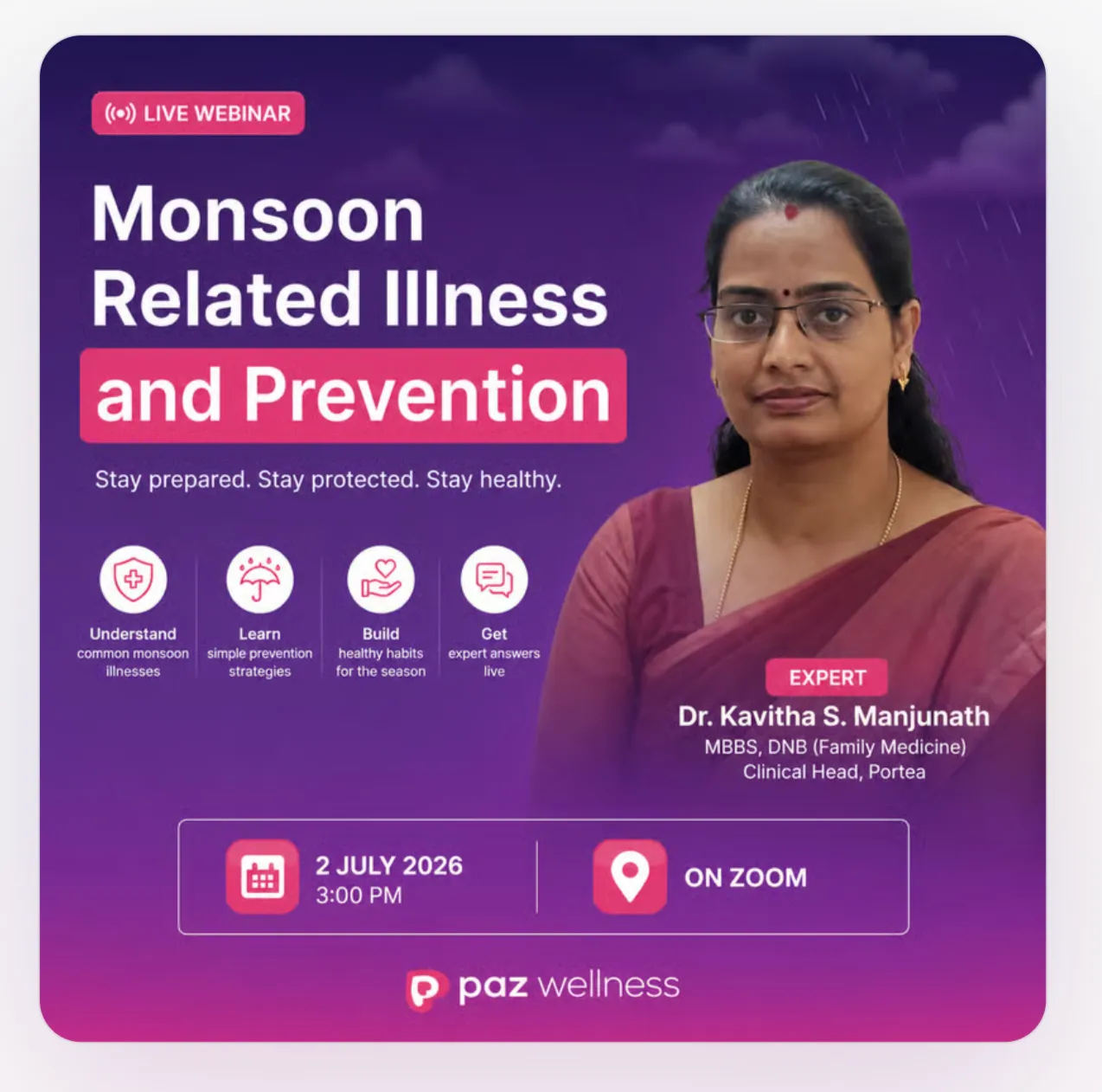
In a recent Paz Wellness webinar, Dr. Kavitha S. Manjunath (MBBS, DNB – Family Medicine), Clinical Head at Portea, shared valuable insights into why monsoon illnesses occur, who is most vulnerable, how diseases spread, and what employers can do to create healthier workplaces.
In a recent Paz Wellness webinar, Dr. Kavitha S. Manjunath (MBBS, DNB – Family Medicine), Clinical Head at Portea, shared valuable insights into why monsoon illnesses occur, who is most vulnerable, how diseases spread, and what employers can do to create healthier workplaces.
The arrival of the monsoon brings cooler temperatures and much-needed relief from the summer heat. However, it also brings a surge in seasonal illnesses, ranging from viral infections and influenza to mosquito-borne diseases like dengue and malaria. For employers, this often translates into higher absenteeism, reduced productivity, and increased healthcare costs.
Protecting employee health during this time requires more than simply encouraging employees to "stay safe." It calls for proactive planning, awareness campaigns, and effective workplace wellness programs that educate employees, encourage preventive care, and make healthy choices easier.
Why employee health needs extra attention during monsoon
Monsoon creates the environment for bacteria, viruses, and mosquitoes to thrive. Increased humidity, stagnant water, contaminated food and water, and crowded indoor spaces all contribute to the spread of infections.
From an HR perspective, this means:
More sick leaves
Lower employee productivity
Increased medical claims
Higher risk of workplace outbreaks
Greater pressure on managers and HR teams
Investing in health and wellness programs during this season helps prevent illness before it starts while reinforcing a culture of wellbeing in the workplace.
Understanding how monsoon diseases spread: The Epidemiologic Triad
One of the key concepts discussed during the webinar was the Epidemiologic Triad, a public health model used to explain why diseases spread.
Disease occurs when three factors come together:
1. Environment
The environment plays a significant role during the rainy season.
Common environmental risk factors include:
Stagnant rainwater
Poor sanitation
High humidity
Water contamination
Mosquito breeding grounds
Crowded indoor workplaces with limited ventilation
Although employers cannot control the weather, they can reduce workplace risks by maintaining clean premises, improving ventilation, and eliminating stagnant water around office buildings.
2. Agent
Agents are the organisms that cause disease.
These include:
Viruses
Bacteria
Parasites
Fungi
Different agents are responsible for different monsoon illnesses, from influenza viruses to bacteria that cause typhoid and cholera.
3. Host
The host refers to the individual exposed to the disease-causing agent. Interestingly, Dr. Kavitha explained that not all hosts have the same level of risk.
Which employees are most vulnerable during monsoon?
Although everyone can fall sick during the rainy season, the severity of illness often depends on an individual's overall health and immunity.
Category 1: Employees with chronic medical conditions
This group is at the highest risk. It includes employees with:
Diabetes
Heart disease
Kidney disease
Liver disease
Chronic lung diseases
Cancer
Pregnant women
Older adults
Because their immune systems may already be compromised, infections tend to become more severe and recovery often takes longer. For HR teams, identifying these employees and ensuring they have access to flexible work options, health insurance support, and medical guidance can significantly improve employee health outcomes.
Category 2: Healthy employees with poor lifestyle habits
Not every high-risk employee has an existing medical condition. Some employees are healthy but unknowingly increase their risk through unhealthy habits.
Examples include:
Skipping meals
Sleeping late
Poor nutrition
Low water intake
Lack of exercise
Ignoring personal hygiene
Delaying medical treatment
Frequently eating unhygienic food
According to Dr. Kavitha, these employees often experience more severe infections than those who consistently practice healthy habits.
Category 3: Healthy employees with strong preventive habits
These employees generally:
Eat nutritious food
Stay physically active
Sleep well
Wash hands regularly
Stay hydrated
Seek medical attention early
Follow vaccination recommendations
They are not immune to monsoon illnesses, but infections are often milder, and recovery tends to be quicker.
The key takeaway is simple:
All three categories can become ill during the monsoon, but the intensity and recovery differ significantly depending on overall health and lifestyle.
Common monsoon diseases every HR team should know
Understanding the different types of seasonal illnesses enables HR teams to create more effective corporate health programs.
1. Food and Water-Borne Diseases
Heavy rainfall often contaminates drinking water and food supplies. Common diseases include typhoid, cholera, gastroenteritis and food poisoning.
Symptoms
Fever
Vomiting
Diarrhea
Stomach pain
Loss of appetite
Weakness
HR prevention strategies
Ensure access to clean drinking water
Maintain hygienic office cafeterias
Encourage employees to avoid uncovered street food during outbreaks
Share food safety guidelines through internal communication
2. Airborne Diseases
Airborne infections spread through tiny respiratory droplets released when infected individuals cough, sneeze, or even talk. Common illnesses include influenza (Flu), viral fever and common cold.
Symptoms
Fever
Sore throat
Dry cough
Runny nose
Headache
Fatigue
Muscle pain
HR prevention strategies
Encourage employees with symptoms to work remotely when possible
Improve indoor ventilation
Promote respiratory hygiene
Keep sanitizers easily accessible across the workplace
3. Vector-Borne Diseases
Vector-borne diseases become especially common during monsoon because mosquitoes breed rapidly in stagnant water. Examples include dengue, malaria and chikungunya.
An important insight from the webinar was that dengue mosquitoes primarily bite during the daytime. Since most employees spend their day at work, offices should not assume exposure happens only at home.
HR prevention strategies
Eliminate stagnant water near office buildings
Inspect rooftop drains, parking lots, planters, and outdoor areas regularly
Conduct periodic pest-control treatments
Encourage employees to use mosquito repellents, especially if commuting during the day
Early signs of monsoon illnesses employees should not ignore
Many monsoon diseases begin with similar symptoms.
Employees should watch for:
Fever
Persistent body aches
Weakness
Fatigue
Reduced appetite
Headache
Muscle pain
Vomiting
Nausea
Encouraging early reporting and timely medical consultation can prevent complications and reduce long periods of sick leave.
When should employees seek medical attention?
During the webinar, Dr. Kavitha highlighted several warning signs that require immediate medical evaluation.
Employees should seek professional care if they experience:
High fever above 102°F lasting more than two days
Persistent vomiting
Reduced food intake
Decreased urine output (possible dehydration)
Difficulty breathing
Bleeding gums
Black or tarry stools
HR teams should educate employees that self-medication may delay diagnosis, particularly for illnesses such as dengue and typhoid.
Practical tips to improve employee health during monsoon
Simple preventive habits can significantly reduce the spread of seasonal illnesses.
Maintain personal hygiene
Wash hands regularly with soap and water
Use hand sanitizers when washing facilities aren't available
Avoid touching the face frequently
Eat safe food
Consume freshly cooked meals
Wash fruits thoroughly
Avoid stale food
Drink safe, filtered water
Stay hydrated
Although temperatures are lower during monsoon, dehydration remains common due to fever, diarrhea, and vomiting. Encourage employees to drink enough water throughout the day.
Strengthen immunity
Promote balanced nutrition, seasonal fruits, protein-rich meals, adequate sleep and regular physical activity. These small habits contribute significantly to employee health throughout the rainy season.
How HR can build effective workplace wellness programs during monsoon
Seasonal wellness initiatives don't have to be complex. Small, consistent actions can make a meaningful difference.
Flexible work arrangements for recovering employees
These wellness activities for employees help reduce absenteeism while creating a healthier, more engaged workforce. The insights shared by Dr. Kavitha S. Manjunath, Clinical Head at Portea, reinforce an important message: while not every illness can be prevented, many can be managed or avoided through awareness, early intervention, and healthy workplace practices.
Whether it's improving hygiene, eliminating mosquito breeding sites, promoting vaccinations, or investing in health and wellness programs, proactive HR teams can create safer workplaces where employees stay healthier, more productive, and better prepared throughout the monsoon season.
How Pazcare helps employers build healthier workplaces
Supporting employee health goes beyond offering insurance, it requires continuous care, preventive health initiatives, and accessible healthcare support.
With Pazcare, employers can strengthen their workplace wellness programs through doctor-led wellness webinars, annual health check-ups, preventive care initiatives, digital healthcare support, and comprehensive group health insurance. Together, these solutions help organizations promote wellbeing in the workplace, reduce absenteeism, and build a healthier, more resilient workforce all year round.
With over 5 years of experience in marketing, Pinkasha Thaper is the Marketing Manager at Pazcare, where she wears many hats and wears them all with heart. From crafting customer communications and driving product marketing to managing social media and building the annual marketing and wellness calendars, she's the kind of person who finds joy in both the big picture and the little details. Beyond her marketing role, Pinkasha is the mind and soul behind Paz's wellness sessions, deeply committed to making employee wellbeing a conversation worth having. Through her blogs, she shares insights, stories, and learnings straight from the wellness floor because she believes that when people feel good, they do good.
Follow on:
Thanks for subscribing! If it’s your first time, check your inbox. Otherwise, you’re already on our list
Oops! Something went wrong while submitting the form.
Ready to give yourself and your team the best employee benefit experience?
In Human Resource Management (HRM), employee health and safety refers to policies and practices that ensure a safe, healthy, and comfortable work environment. This includes preventive measures such as ergonomics, health check-ups, mental wellness programs, and compliance with workplace safety regulations.
What is the employee health safety policy?
An employee health and safety policy is a formal document that outlines an organization’s commitment to protecting employees from workplace hazards
What does an employee health insurance policy cover?
It typically covers hospitalization expenses, surgeries, and medical treatment, with optional coverage for dependents.
Why are regular employee health screenings important?
Regular screenings detect conditions like diabetes, hypertension, and thyroid disorders before they produce symptoms. For employers, early detection reduces long-term claims costs and provides health data that supports smarter benefits design.
Are employee health checkups mandatory under labour codes?
They are mandatory for certain age groups and for employees working in hazardous or high-risk roles.










.svg)
.svg)